
Various layouts are available for exhibitions:
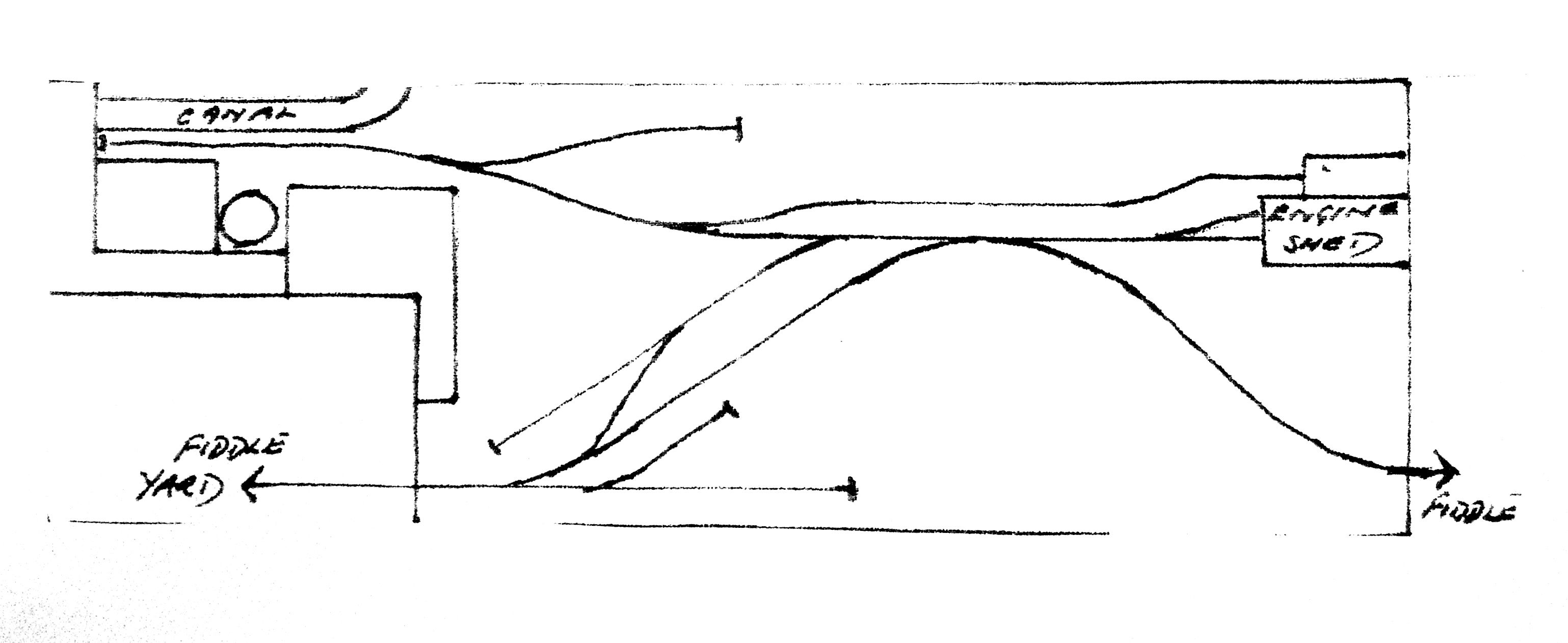
Set in the 1930s, this small narrow gauge line runs through the English countryside and serves a small canal and pottery. The pottery is based on the buildings of the Coalport factory in Ironbridge. The layout is of no particular prototype but provides the opportunity to showcase a wide variety of 2ft gauge narrow gauge stock.
The layout is 8ft long. The central module is 4ft and a 2ft module bolts on to each end. Each 2ft module has a fiddle yard each of which incorporates five cassettes which mean that ten trains can be stored to run onto the layout. The main station lies at the end of Bottle Kiln Lane located in the centre of the line along with the loco shed. Trains enter the layout from both directions, locos are exchanged at the station and stock can be shunted into the various sidings or down to the canalside.
The layout uses Peco 009 Crazt track. Along with scratchbuilt buildings are two Hornby Scaledale items which have been considerably improved and weathered. The majority of locos and stock are scratchbuilt and feature both steam and diesel prototypes. The wide range of industrial steam and diesel stock are built in plasticard and run on variety of chassis from Germany and Japan.
A few pictures of Bottle Kiln Lane can be found on our photos page
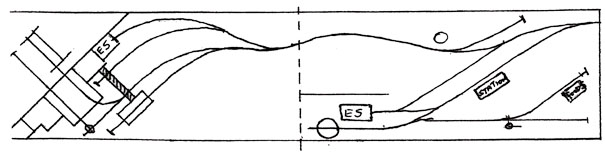
Set in the 1950s, this layout assumes that the industrial lines on the Isle of Purbeck were extended to not only carry the ball clay but to include a passenger and local freight service. These trains ran into a station located at Corfe. From there a line extends through the Dorset countryside, covered in gorse, into the works of the Purbeck Clay Company. Purbeck is not intended to be a model of the actual industrial lines that existed but illustrates the ball clay industry with weathering beds, a drag liner and a clay processing works.
To give the layout a prototypical feel various original buildings have been modelled. Scratchbuilt models of Lewin and Manning Wardle locos can be seen working the clay trains along with the school wagon which daily transported children from Goathorn to Norden (Corfe). The station area consists of a small station building, a goodshed and loco shed and outside is parked a local bus belonging to the Hants and Dorset Bus Company. Purbeck was featured in Railway Modeller Oct/Nov 2008.
The layout is 11ft x 20" (3.5m x 0.5m) and features working lighting, turntables, and crane.
A few pictures of Purbeck can be found on our photos page
The Ditton Railway Company represents a fictitious narrow gauge railway (2ft 3" gauge) modelled in the 1930s. The layout has three scenic sections each joined by a fiddle yard, and a fiddle yard at one end. Initially built as a concept of what could be achieved using half a sheet of Sundela. The modular concept allows the builder, once the track is laid, to operate trains and model stock, buildings or scenery as the fancy takes him. It allows the layout to be developed over a period of time and, as this layout illustrates, the modelling of three very different scenic locations. The fiddle yards allow trains to leave one baseboard and either travel through to the next or be held behind the scenes, thus adding both to viewing and operating interest. Peco track is used throughout and there is a wide range of scratchbuilt and kit bashed locomotives and rolling stock. Very little ends up as it comes out of the box! Buildings are a mixture of scratchbuilt and modified kits with a wealth of small detail included to capture that "narrow gauge atmosphere".
Long Ditton was the first module completed and is the terminus of a small country narrow gauge line. This end of the layout features a small station, goods shed, an engine shed and 2 sidings running into an industrial warehouse. To make operating interesting the industrial yard can only be operated by small industrial diesels and there is a notice to this effect at the entrance to the yard. Ditton Marsh is a through module and represents the fictitious canal basin at the mouth of the River Dit. It features a boatyard, woodyard, canal bridge and a wooden jetty where locos run out over the water to shunt stock. The Custom House is modelled from an original in Chatham Dockyard. Ditton Heath is the latest module featuring the main station on the line with a carriage shed, the main loco depot and the village of Ditton is the background. In the foreground is a small ground frame box with full interior, and the smallholding of Mr S. Holmes of Conan Doyle fame. A very well kept secret is that he, after living in Baker Street, retired to Ditton with his dog Baskerville to breed bees. Spot the dog, but of the great man there is no sign!
The layout is 20ft x 18" (6m x 0.45m), free standing, curtained and illuminated requiring one 240v, 13amp socket.

Julian Evison had a marvellous holiday in Namibia and picked up some books (there aren't many) on the railways, notably Namib Narrow Gauge by Moir and Crittenden. One photo of a station called Khan, which looked like the surface of the moon, caught his eye and inspired this layout. More details and pictures here.
Built by the late Frank Saunders, this much loved layout is now owned and exhibited by group member Andrew Waltes. More details are available on Andrew's website.
Built and exhibited by Andrew Walters, this layout is set in East Surrey in 1967. More details are available on Andrew's website.